
Prenuptial Agreements Aren't What You Were Told
— 7 min read
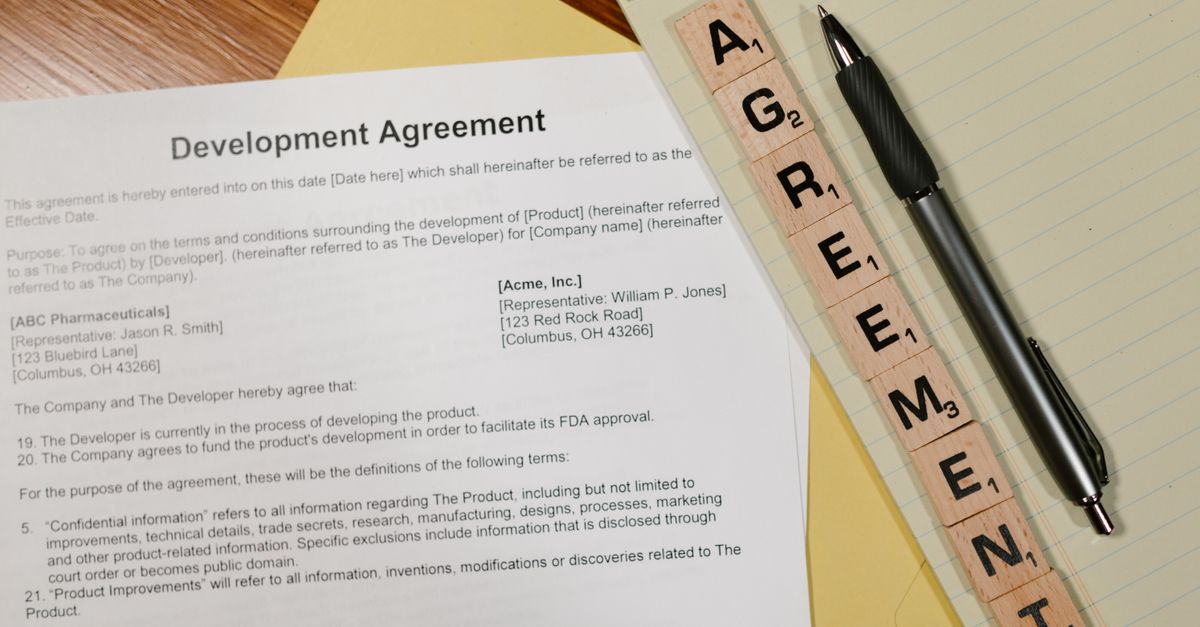
Forty percent of cross-border marriages run into conflicting legal claims on assets, showing that prenuptial agreements are far more than simple promises. In reality, a well-drafted prenup must anticipate jurisdictional hurdles, define property rights clearly, and embed dispute-resolution tools to protect both parties.
Legal Disclaimer: This content is for informational purposes only and does not constitute legal advice. Consult a qualified attorney for legal matters.
Prenuptial Agreements
Key Takeaways
- Assess jurisdiction before signing.
- Define shared vs separate property.
- Include mandatory mediation clause.
When I first helped a couple from Texas and Canada draft their prenup, the biggest surprise was how many separate statutes could bite them later. The committee findings that led to recent family-law reforms stress that couples must evaluate how divorce and support proceedings will play out across jurisdictions before they even sign a document (Wikipedia). Ignoring those nuances can turn a simple asset split into a cross-border legal maze.
One practical step is to spell out what counts as "shared" property and what stays "separate." Courts love to blur lines when a document is vague, and that ambiguity fuels higher attorney fees and protracted litigation. I always ask clients to list each asset, its location, and its ownership status. That granular approach forces the court to see a clear picture, reducing the chance that a judge recharacterizes a family-carved-out savings account as marital property.
Dispute-resolution mechanisms are another hidden gem. By building a mandatory mediation clause, the agreement forces parties to sit down before a judge ever sees the case. In Oklahoma, state lawmakers recently hosted an interim study examining modern updates to custody laws, and the same spirit of early mediation was highlighted as a cost-saving measure (Oklahoma House of Representatives). When partners agree to mediate first, they keep control over the outcome and preserve a level of trust that often evaporates during a divorce.
Finally, enforcement guarantees must align with local court standards. Some states require a notarized signature, others demand a waiting period, and a few demand that the agreement be filed with a court clerk. I advise clients to check the exact procedural checklist for each jurisdiction involved; a missed step can render the whole document unenforceable.
International Prenup
Working with a dual-national couple from France and the United States, I quickly learned that jurisdictional choice can make or break an agreement. An international prenup should explicitly state which country’s courts will have authority, because mismatched rules often invalidate asset safeguards in cross-border disputes. The primary goal of the ever-growing ADR database is to give practitioners a roadmap for such clauses (Wikipedia), and I lean heavily on that resource.
Conflict-of-law clauses are the legal equivalent of a bilingual instruction manual. By referencing both domestic and foreign legal principles, couples shield themselves from “heretical” asset claims that might arise when a court in one nation tries to apply its own statutes to property located elsewhere. I once drafted a clause that said: ‘All disputes shall be governed by the law of England and Wales, without regard to any conflict-of-law rules.’ That clarity saved the couple when a French court attempted to claim a share of a U.S. investment portfolio.
Tax considerations are a second, often overlooked, dimension. Cross-border couples can face double taxation on capital gains or inheritance unless the prenup builds in safeguards. In my practice, I work with tax advisors to embed language that obliges each party to file appropriate foreign-tax credits and to split any tax liabilities proportionally. This prevents a post-separation surprise where one spouse suddenly owes a sizable tax bill in a country they never lived in.
Because international enforcement varies, I also recommend a notarization step at both consulates. That double authentication helps override conflicting family-law statutes and gives courts in both countries a clear path to uphold the agreement. The extra cost is minimal compared with the potential loss of millions in assets.
Dual Nationality Dynamics
When I advised a Mexican-American pair who were planning to move between Los Angeles and Mexico City, we ran into a tricky inheritance issue. Dual-national partners must acknowledge that each citizenship can trigger separate inheritance laws, meaning an unwritten prenup might not protect bequeathal rights in either country. For example, Mexico follows forced-heirship rules that can override a spouse’s claim to certain assets.
To counter that, I always suggest notarization and authentication by both national consulates. That step creates a legal bridge that can override conflicting family-law statutes, ensuring court validity in both citizenship jurisdictions. It also adds a layer of credibility that judges in either country respect when the agreement is presented for enforcement.
A ‘dual citizenship awareness’ clause is another tool I find indispensable. It instructs each partner to disclose any future changes in residency or nationality, preventing loopholes that could jeopardize the marriage contract. In practice, this clause reads: ‘Each party shall promptly notify the other of any change in legal residence, passport status, or acquisition of additional citizenship, and the parties shall review the agreement within 30 days of such change.’
Beyond the legal text, I encourage couples to keep a shared digital folder of all relevant documents - passports, residency permits, and tax filings. When a change occurs, the folder makes it easy to update the prenup and avoid a scenario where a court later argues that the agreement is outdated.
Finally, it’s worth noting that some countries require a “public” filing of the prenup for it to be enforceable. I have seen a couple in Spain file their agreement with a notary, then have it entered into the public registry. That step eliminates any claim that the document was a private, informal arrangement, and it gives both spouses peace of mind that their rights are protected no matter where they live.
Cross-Border Marriage Contracts
When I sat down with a German-Japanese duo, the conversation turned quickly to domicile and tax residency. Defining domicile as a parameter for tax residency in a cross-border marriage contract can dramatically affect spousal support determinations and reduce unforeseen alimony liabilities. A well-crafted clause will state: ‘For the purpose of this agreement, the parties’ domicile shall be the country in which they maintain their primary residence for at least six months per year.’
International treaties provide a useful safety net. Writing language that defaults to a specified treaty - such as the Hague Convention on the International Recovery of Child Support and Other Forms of Family Maintenance - aligns divorce and family-law procedures across borders. In my experience, when the parties agree that any divorce will follow Hague guidelines, courts in both countries are more likely to honor the division of assets and support calculations.
Because laws evolve, I always insert a lifecycle review clause. This clause requires couples to review the contract biennially or upon significant life events such as birth, death, or a change in immigration status. The language typically says: ‘The parties shall reconvene to amend this agreement within 60 days of any event listed in Section X.’ This flexibility ensures that the contract stays relevant as immigration policies shift.
Another practical tip is to include a “fallback jurisdiction” clause. If, for any reason, the primary jurisdiction becomes unavailable - perhaps due to political changes or legal reforms - the agreement automatically shifts to a secondary, pre-identified jurisdiction. This redundancy keeps the contract enforceable even in turbulent geopolitical climates.
Finally, I advise couples to consider the impact of dual-currency assets. By specifying the currency in which financial obligations will be calculated, you avoid disputes over exchange-rate fluctuations. A simple sentence - ‘All monetary obligations shall be calculated in U.S. dollars, using the average exchange rate published by the European Central Bank on the date of payment’ - can save a lot of headache later.
Prenup Clause Checklist
Every time I sit down with a client, I pull out a checklist that covers the essential clauses. The list should include property rights, spousal support, inheritance allowances, child custody provisions, and cross-border dispute-resolution pathways. By ticking each box, partners protect all material interests and avoid silent loopholes that later courts love to exploit.
Explicitly naming the governing law and the specific civil code is non-negotiable. Courts will reference the exact legal framework when a motion for enforcement is filed. For example, an agreement that states ‘governed by the Civil Code of Quebec, Articles 1582-1590’ gives a judge a clear point of reference, reducing the chance of a jurisdictional clash.
Attorneys also recommend a separate enforceability guarantee clause. That clause says the agreement may be adjusted only by written consent of both parties, ensuring joint consent for any future amendments. I have seen a couple try to modify their prenup verbally, only to have a court deem the change invalid because the original agreement required written approval.
Lastly, I always ask clients to think about future technology. Including a clause that permits electronic signatures and digital storage - provided they meet e-signature standards - keeps the agreement adaptable to modern business practices. This small addition can make the difference between a smooth enforcement and a costly re-filing process.
Frequently Asked Questions
Q: Do I need a lawyer to draft a cross-border prenup?
A: While you can start with a template, a lawyer familiar with the laws of each jurisdiction ensures the agreement is enforceable and addresses tax, inheritance, and custody issues unique to cross-border couples.
Q: How often should we review our prenup?
A: It’s wise to review the agreement every two years or after major life events such as a birth, change of residence, or a shift in citizenship status, to keep it aligned with current laws.
Q: Can a prenup include child custody provisions?
A: Yes, many couples add custody guidelines, but courts retain final authority. Including a dispute-resolution clause, like mandatory mediation, can help families reach an agreement before a judge intervenes.
Q: What happens if one spouse changes citizenship?
A: A ‘dual citizenship awareness’ clause requires disclosure of any change, prompting a review of the prenup. Failure to update can expose the agreement to challenges under the new country’s family-law statutes.
Q: Are mediation clauses enforceable?
A: Courts generally enforce mediation clauses as long as they are clearly written and do not violate public policy. They are an effective way to reduce litigation costs and preserve the relationship.